

MECTRONICS, part of the Badami Holding Group, delivers high-performance, precision-engineered electronic solutions for battery care and maintenance. With a commitment to innovation and quality, MECTRONICS supports the automotive sector worldwide.


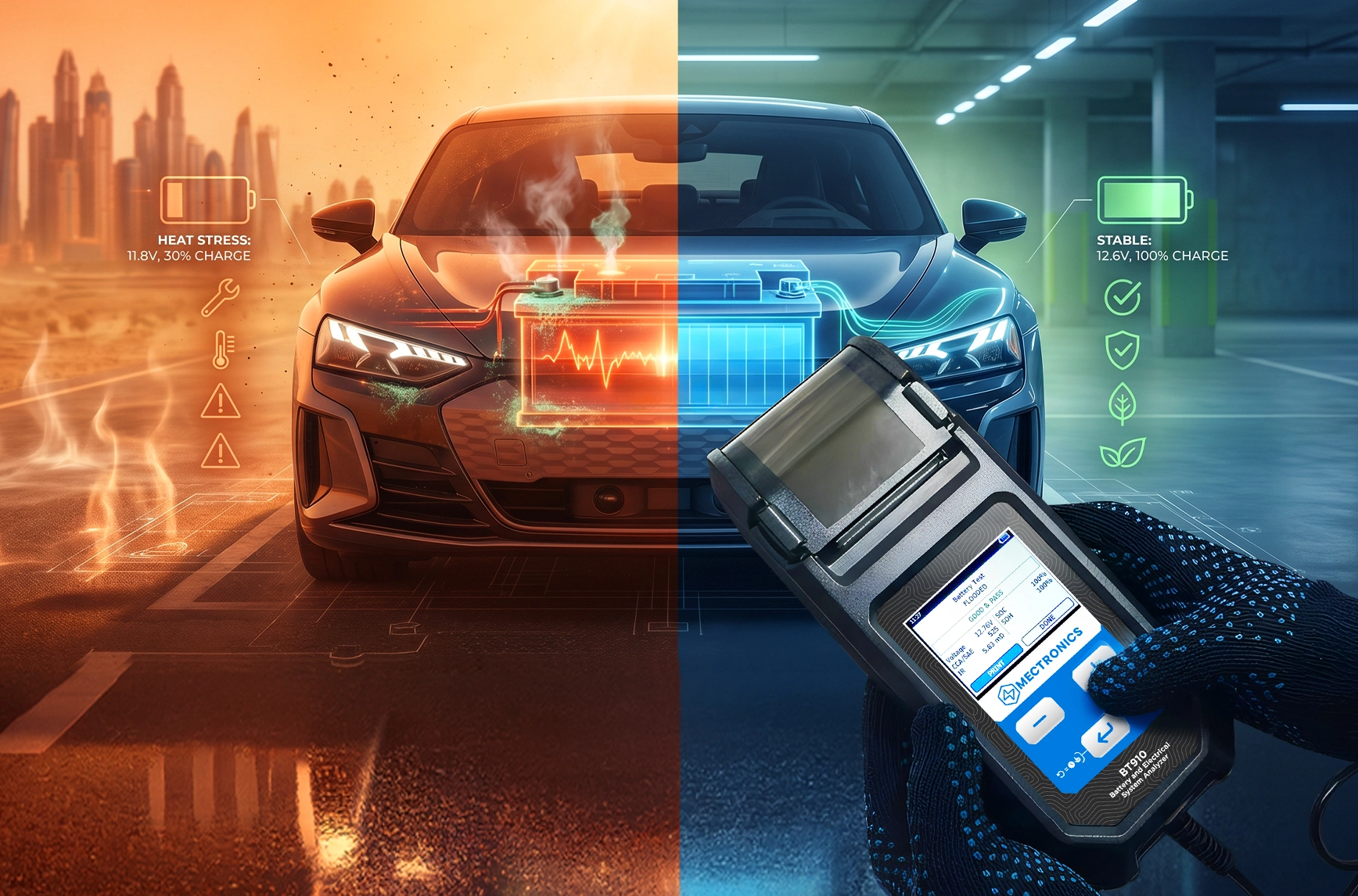
A battery may appear perfectly fine at the start of the week, yet fail just a few days later. In the UAE, this happens even faster. The damage develops silently due to extreme heat, frequent short trips, and continuous air conditioning use, even though everything looks normal on the surface.
Battery failure does not usually happen all at once. It builds up gradually. It may begin with a slight drop in voltage, then the engine takes longer to start, and eventually the car refuses to start altogether. Once you recognise these signs, it becomes easier to anticipate problems. With the right approach and proper tools, these issues can be detected early and managed before they lead to a breakdown.
Many people think heat is the only reason automotive car batteries fail in the UAE Heat does cause damage, especially when temperatures stay above 40°C, but daily usage plays an equally important role. Most drives here are short. A quick school drop or a short office commute. The AC starts immediately and runs at full power, but the drive is not long enough for the battery to fully recharge after starting the car. When this happens multiple times a day, the battery stays partly charged and slowly loses strength.
Parking in direct sunlight adds more stress. The heat builds up inside the car, and even when the engine is off, some systems like screens or trackers continue to use power. These may seem like small things, but together they put constant pressure on automotive car batteries and lead to early failure.
A voltage reading on its own does not tell you the full story. A battery can show 12.6V and still struggle when you start the car if its internal condition is weak. We suggest not relying only on a multimeter for this reason. From what we have seen in workshops, a good car battery tester that checks internal resistance gives a more realistic view of battery health. Many batteries look fine during a basic voltage check but fail a few days later because the deeper issue was missed. We also recommend paying attention during charging. Using a car battery charger with built-in diagnostics can reveal early warning signs. If the battery takes too long to charge or does not hold a stable level, it usually means the battery is already weakening.
Another point that often gets missed in UAE conditions is the terminal conditions. Dust and heat cause corrosion to build up faster than expected. Even a small layer on the terminals can affect readings and put extra load on the system. We always suggest cleaning the terminals first, then testing the battery. In many cases, what looks like a battery failure turns out to be a connection issue. Simple checks with the right battery testing tools can help avoid unnecessary replacement and give a clearer picture of the actual battery condition.
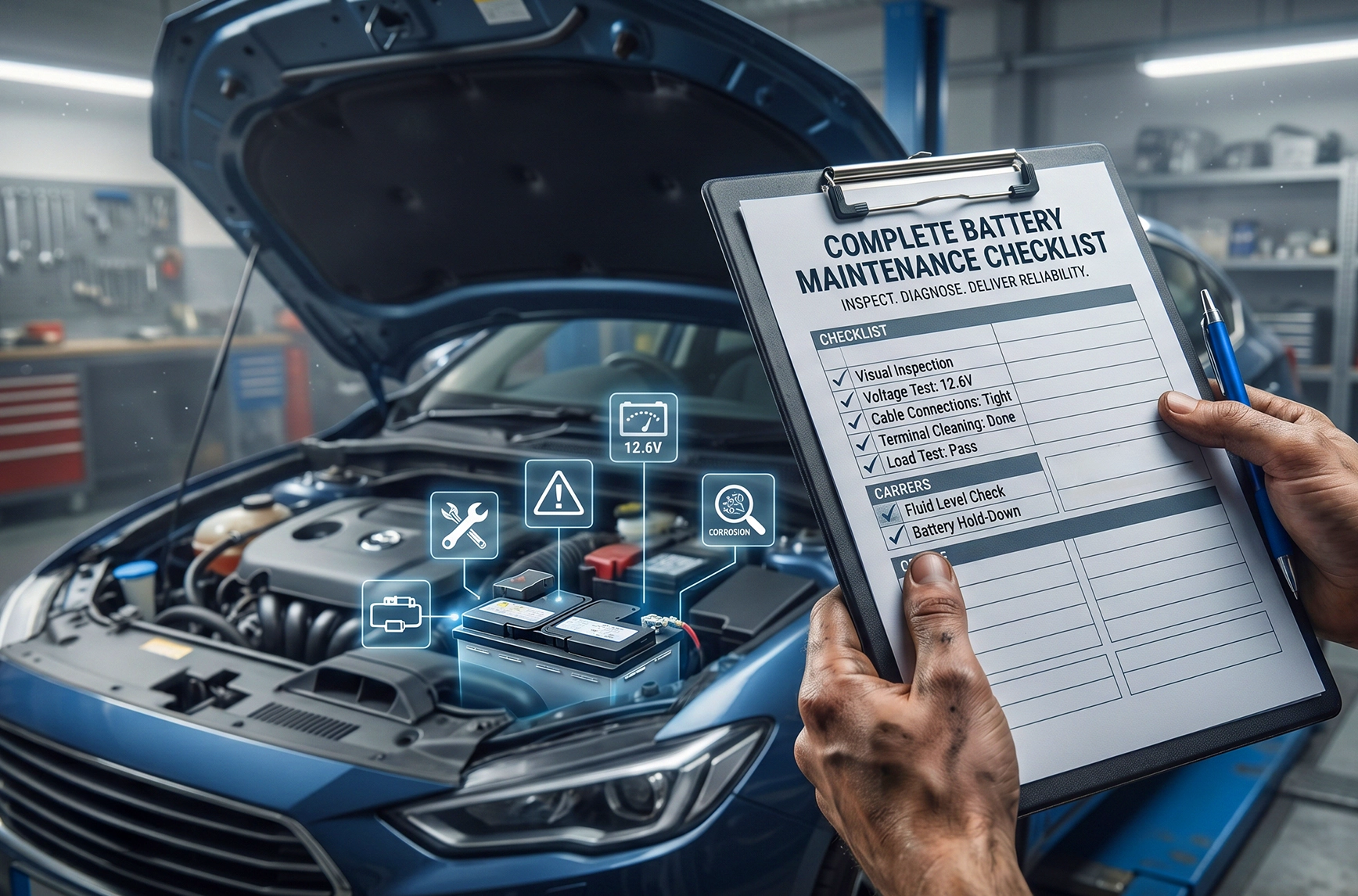
A proper battery diagnosis in a workshop should never start with replacement. It should begin with a few simple checks that quickly point to the real issue. Start with resting voltage. With the engine off, a healthy battery is usually around 12.6V. If it drops below 12.4V, it suggests the battery is not holding a charge well and needs further testing.
Next, check the terminals. Even a small layer of corrosion can affect current flow and cause starting issues that do not reflect the true battery condition. Cleaning them first helps ensure accurate readings. Then perform a load test based on the battery’s CCA rating. This is important because a battery can show normal voltage but still fail under real demand. A quick load test helps reveal hidden weaknesses. After that, check the alternator while the engine is running. A proper charging system should stay within the normal range. If it is too low or too high, the issue may be with charging, not the battery. Also, observe how the battery recovers after charging. A healthy battery returns to normal in a steady time. If it takes longer, it often means internal wear.
For workshops and fleets, single readings are not enough. Tracking results over time helps spot patterns and avoid unnecessary replacements. This is where proper battery diagnostic tools matter. Using reliable equipment from Mectronics helps technicians reduce guesswork and follow a more accurate, structured testing process in real workshop conditions.
Good automotive car battery care is about preventing problems, not waiting for the car to break down. In UAE conditions, heat and short trips often stop the battery from getting fully charged. That is why using a simple car battery charger from time to time helps keep it healthy, especially for cars that are not driven long distances. Basic checks also help a lot. A good battery tester or electrical system tool can quickly show if the automotive car battery is getting weak, before it fails on the road. Many issues are not even battery failures. Dust and heat can cause corrosion on terminals, which leads to poor contact. Cleaning them can often fix the problem. Regular checking and simple charging habits help batteries last longer and perform more reliably in everyday UAE driving.
A workshop that tests properly with the right battery diagnostic tools usually performs better than one that guesses. We have seen that the difference is not really about experience, but about the tools being used. When a workshop uses the right tools, decisions become much easier and faster. A proper car battery tester, a good charger that works with AGM, EFB, and regular batteries, and a reliable jump starter help remove guesswork. These are not “extra” tools anymore. In real workshop work, they are part of daily use. They also save money over time because they reduce wrong battery changes and repeat customer visits for the same issue.
At Mectronics, we focus on car battery care tools built around the real needs of workshops, fleets, and car owners in UAE conditions. We do not follow a standard catalogue approach. We work based on feedback from technicians, service centres, and fleet teams who deal with heat, dust, and heavy daily usage. Have a question or need a recommendation? Contact us or email us at [email protected].

MECTRONICS, part of the Badami Holding Group, delivers high-performance, precision-engineered electronic solutions for battery care and maintenance. With a commitment to innovation and quality, MECTRONICS supports the automotive sector worldwide.